

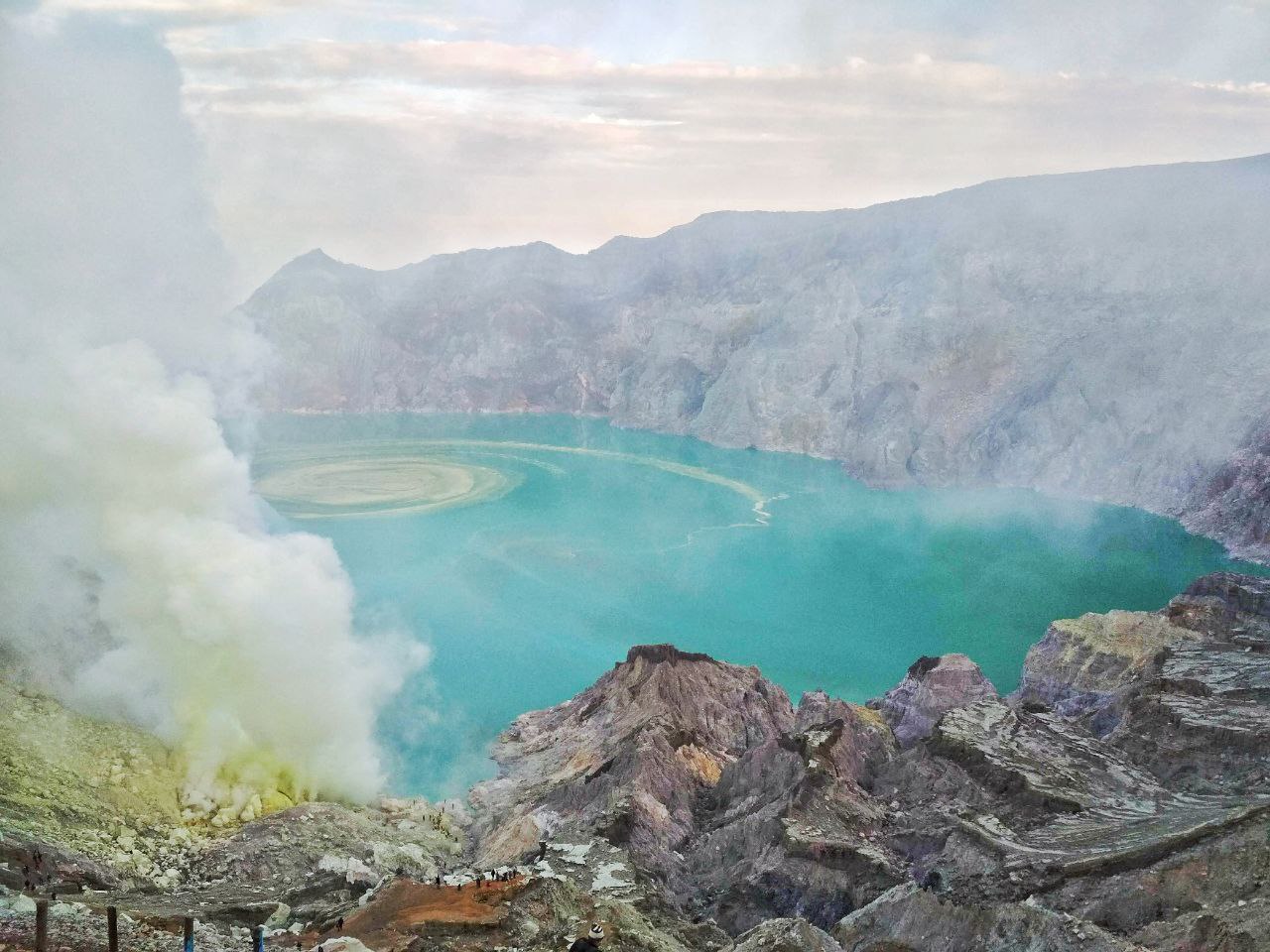
Beyond the tropical paradise of Bali lies its equally enchanting neighbor, Java Island. Stretching from Banten in the west to East Java in the east, this densely populated island still hides extraordinary natural wonders. One of its most breathtaking treasures is Ijen Crater (Kawah Ijen) in Banyuwangi.
Located only about 11 km from Bali across the strait, Ijen has become one of Indonesia’s most jaw-dropping destinations — famous worldwide for its rare and mesmerizing blue fire phenomenon.
This natural wonder is said to exist in only two places on Earth: Iceland and Ijen. While Iceland remains on many travelers’ bucket lists, Indonesia’s own blue fire is absolutely worth the journey.
Where is Ijen Crater?
Ijen Crater is located in Banyuwangi, East Java, at approximately 2,300 meters above sea level. It is part of the Ijen Volcano Complex and is easily accessible from:
- Banyuwangi city center (35 km)
- Bali (via Ketapang-Gilimanuk ferry crossing)
How to Visit Ijen Crater
Join an Open Trip (Recommended Option)
The easiest and most convenient way to visit Kawah Ijen is by joining an organized tour.
Open trips are widely available in:
- Banyuwangi
- Bali (with hotel pick-up included)
Public transportation to Ijen is extremely limited, so even local travelers often choose guided tours.
There is also an option to get there by using a bike, but I wouldn’t recommend it, since the road can be perilous!
Typical tour itinerary:
- Midnight hotel pick-up (around 12:00–1:00 a.m.)
- 2-hour jeep ride to Paltuding Basecamp
- Start hiking around 2:00 a.m.
- Reach crater rim in approximately 2–2.5 hours
Hiking to the Blue Fire
The hike from the entrance gate to the crater rim takes about 2.5 hours, depending on your fitness level. The trail is manageable but steady uphill.
If needed, local cart services are available for hire to help you ascend part of the trail and conserve energy for the descent into the crater.
Descending Into the Crater
For many travelers, this is the most challenging part.
- Steep, rocky terrain
- Very dark conditions
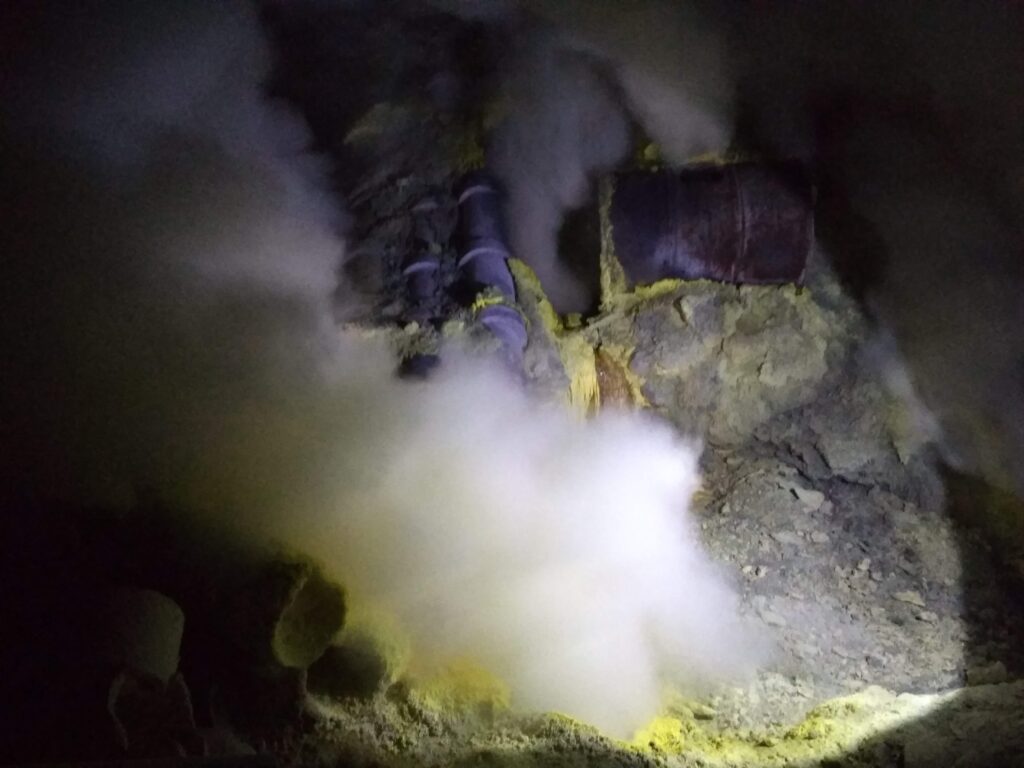
- Strong sulfur smell
- Must rely on headlamp or torch
Technically, access to the crater floor is restricted and considered unsafe, especially within 500 meters of the crater due to volcanic activity. Always follow official guidance and check the volcano status before visiting.
The Sulfur Miners of Ijen
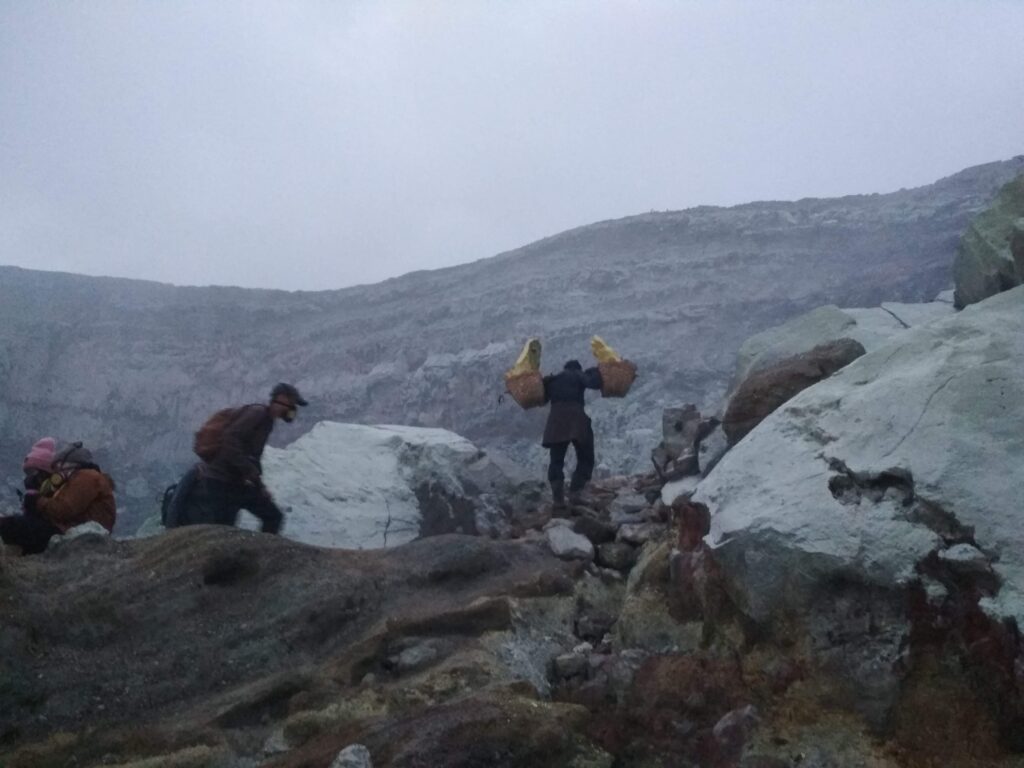
One of the most humbling sights during your hike is witnessing the sulfur miners.
These local workers descend daily into the crater to extract sulfur manually. Using bamboo yokes, they carry heavy loads up the mountain under extremely harsh conditions — exposed to toxic fumes and difficult terrain.
Their resilience adds a powerful human story to your Ijen experience.
The Blue Fire Phenomenon
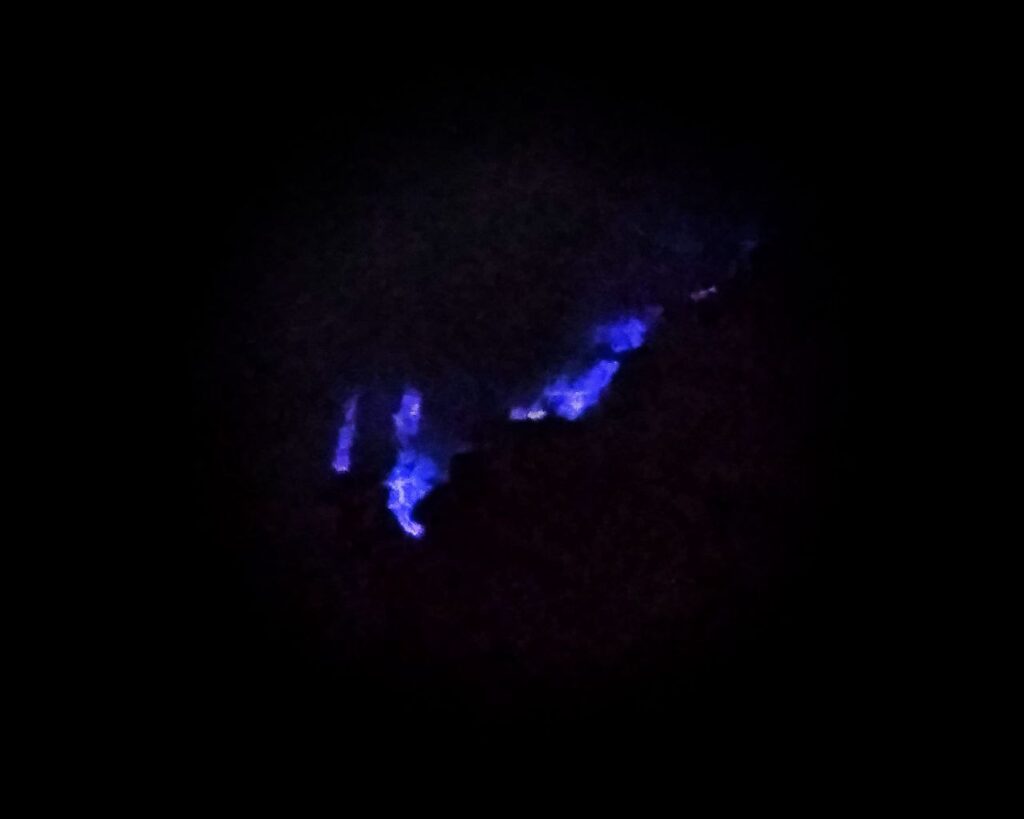
The iconic blue flames are caused by ignited sulfuric gases emerging from volcanic vents. When these gases come into contact with oxygen at high temperatures, they burn electric blue.
Important:
- The blue fire is only visible in complete darkness.
- The earlier you reach the crater, the better the view.
- Once daylight arrives, the blue flames fade.
Sunrise at Ijen Crater
Even after the blue fire disappears, the experience is far from over.
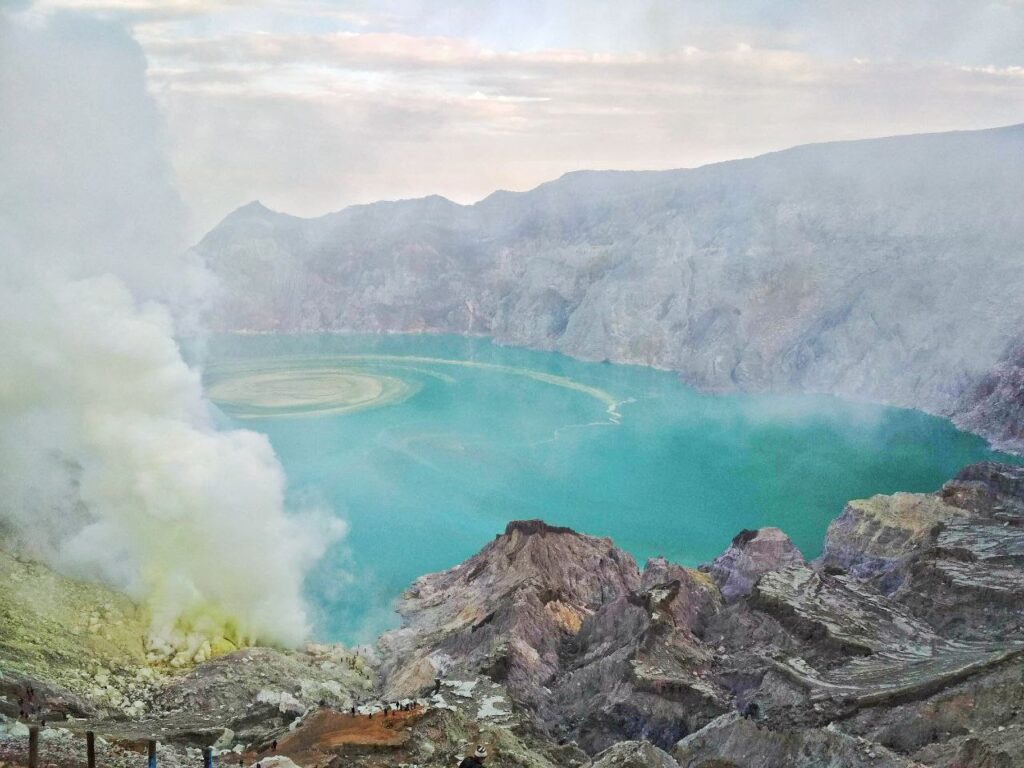
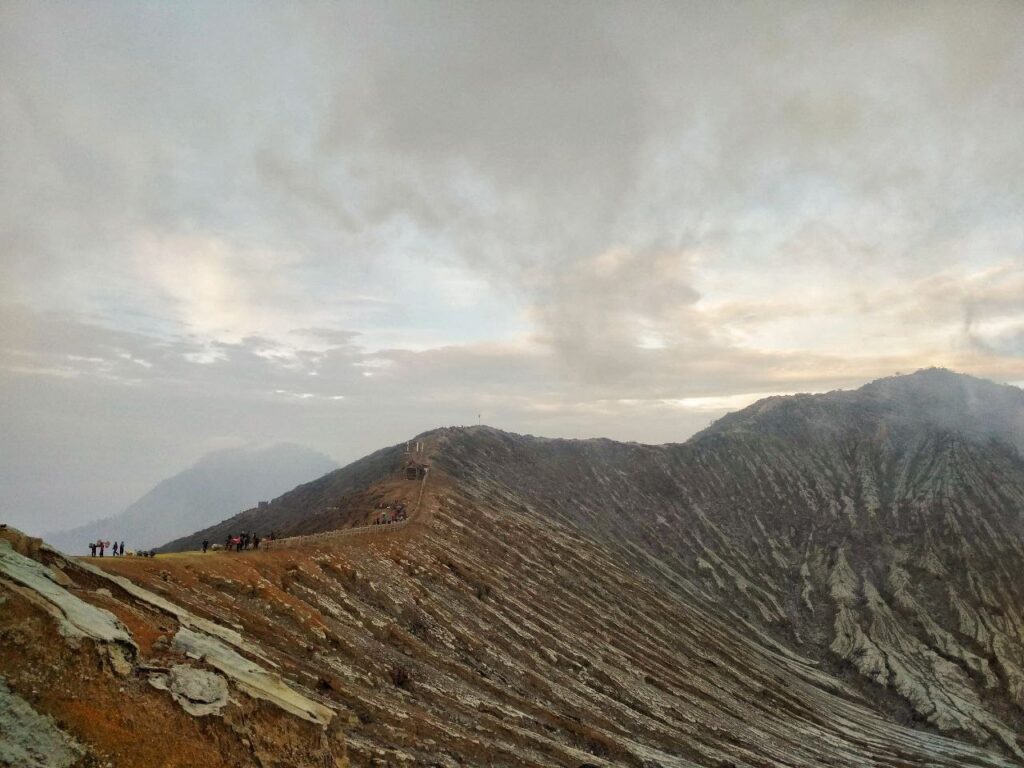
As the sun rises, you’ll witness:
- The turquoise acidic crater lake
- Dramatic volcanic cliffs
- Misty mountains of East Java
- Lush green landscapes
The panoramic view from the summit is truly unforgettable and makes the early wake-up call worthwhile.
Important Safety Tips
- Check volcanic activity status before visiting.
- Wear a proper gas mask (usually provided by tour operators).
- Bring a headlamp or flashlight.
- Wear sturdy hiking shoes.
- Dress warmly (temperatures can drop significantly at night).
- Respect warning signs and safety restrictions.
Remember: Ijen is an active volcano. Safety must always come first.
Best Time to Visit Ijen Crater
The best time to visit is during the dry season (April–October) for clearer skies and safer hiking conditions.
For the best blue fire experience:
- Arrive at the crater between 3:00–4:00 a.m.
- Avoid full moon nights if possible, as darkness enhances the blue glow.
Frequently Asked Questions (FAQ) About Ijen Crater (Kawah Ijen)
1. What is the blue fire at Ijen Crater?
The blue fire at Ijen Crater is a rare natural phenomenon caused by ignited sulfuric gases emerging from volcanic vents. When these gases meet oxygen at high temperatures, they produce electric-blue flames that are visible only in complete darkness.
2. Where is Ijen Crater located?
Ijen Crater is located in Banyuwangi, East Java, Indonesia. It sits at approximately 2,300 meters above sea level and is part of the Ijen Volcano Complex. It is accessible from Banyuwangi city and from Bali via ferry.
3. How do I visit Ijen Crater from Bali?
You can visit Ijen Crater from Bali by:
- Taking a ferry from Gilimanuk to Ketapang (Banyuwangi), then joining a local tour.
- Booking an all-inclusive Ijen tour package from Bali that includes transport, guide, and gas mask.
Most travelers prefer organized tours for convenience. The entrance fee is Rp 5.000,- (weekdays) to Rp 7.500,- (weekends) for Indonesians, and 100.000,- (weekdays) to Rp 150.000,- (weekends) for foreigners.
4. What time should I hike Ijen to see the blue fire?
To see the blue fire clearly, you should start hiking around 2:00 a.m. and reach the crater before 4:00 a.m. The phenomenon is only visible in total darkness and fades after sunrise.
5. Is it safe to descend into the Ijen crater?
Descending into the crater can be risky due to toxic sulfur gases and volcanic activity. Access conditions may change depending on the volcano’s status. Always check official updates and follow local authority guidelines before attempting the descent.
6. How difficult is the Ijen hike?
The hike to the crater rim is moderate and takes approximately 2–2.5 hours. The path is uphill but manageable for most people with average fitness levels. The descent into the crater is steeper and more challenging.
No responses yet