

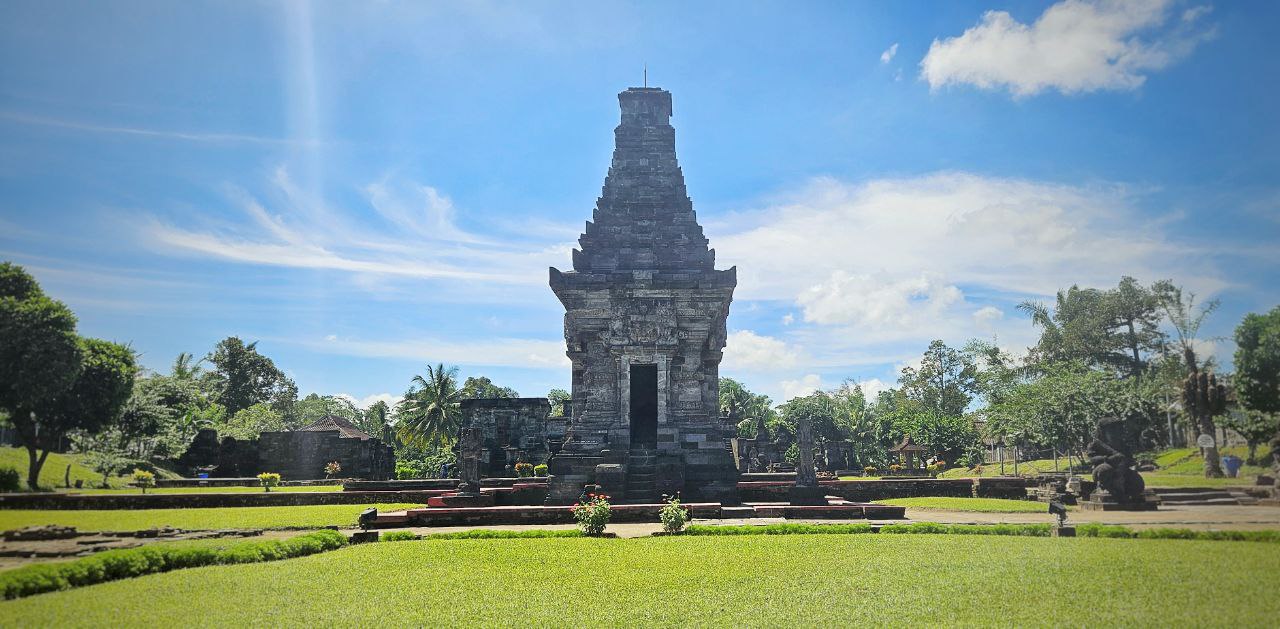
When people talk about ancient temples in Indonesia, Borobudur Temple and Prambanan Temple usually dominate the conversation. But beyond these iconic landmarks lies a lesser-known historical treasure waiting to be explored — Candi Penataran, the largest Hindu temple complex in East Java.
Located just 14 km from downtown Blitar, this hidden gem offers a peaceful, crowd-free alternative for travelers who love history, culture, and off-the-beaten-path destinations.
Where Is Candi Penataran Located?
Candi Penataran sits in Penataran Village, Nglegok District, Blitar Regency, East Java. Unlike Indonesia’s more famous temples, this archaeological site is surrounded by a quiet residential area, giving visitors a more authentic and relaxed atmosphere.
Many travelers accidentally discover this site while exploring Blitar — especially those visiting nearby attractions such as De Karanganjar coffee plantation.
Entrance Fee and Opening Hours (2025 Update)
One of the best things about Candi Penataran?
There is currently no entrance fee (as of 2025).
Visitors are welcome to make voluntary donations to support site maintenance.
- 🕗 Opening hours: 8:00 AM – 5:00 PM
- ☀️ Best time to visit: Morning (to avoid midday heat)
There are limited shaded areas within the complex, so bringing a hat, umbrella, or sunscreen is highly recommended.
The History of Candi Penataran
Built during the golden era of the Kediri Kingdom and later expanded under the Majapahit Kingdom, Candi Penataran dates back to the 12th century. It functioned as an important state temple used for royal ceremonies and religious rituals.
As the largest temple complex in East Java, it reflects the grandeur of Hindu civilization in Java long before colonial times.
Main Structures Inside the Temple Complex
Candi Penataran spans approximately 13,000 square meters and consists of three main sections: the front courtyard, middle courtyard, and rear courtyard.
1. Bale Agung
Located near the entrance, Bale Agung is the first major structure visitors encounter.
- Size: 37 x 19 meters
- Function: Meeting hall for royal ministers
- Design: Stone structure decorated with intricate carvings
This elevated platform once served as a gathering place for high-ranking officials of the kingdom.
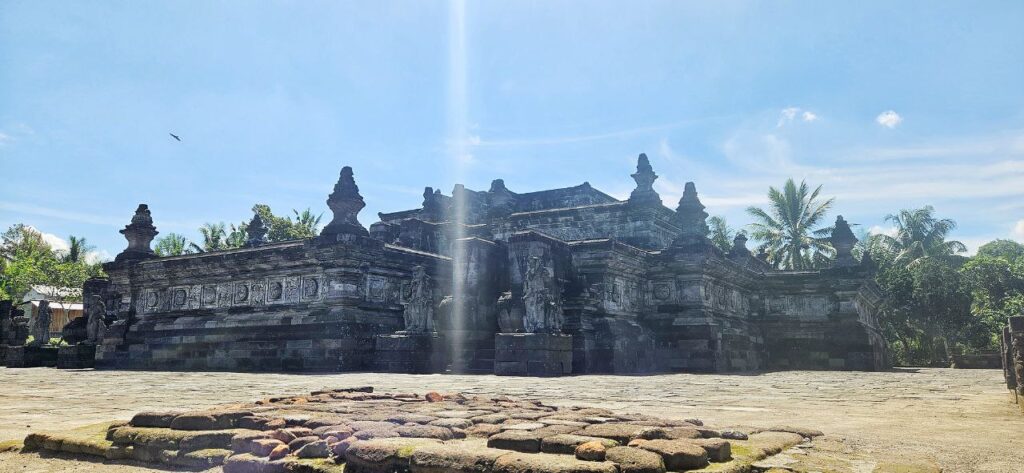
2. Pendopo Teras
Situated southeast of Bale Agung, Pendopo Teras is a square terrace believed to have been used for:
- Placing ceremonial offerings
- Hosting the king during important rituals
Its walls are engraved with reliefs depicting ancient folklore and mythological stories, showcasing the artistic brilliance of East Javanese craftsmen.
3. Candra Sengkala Temple (Brawijaya Temple)
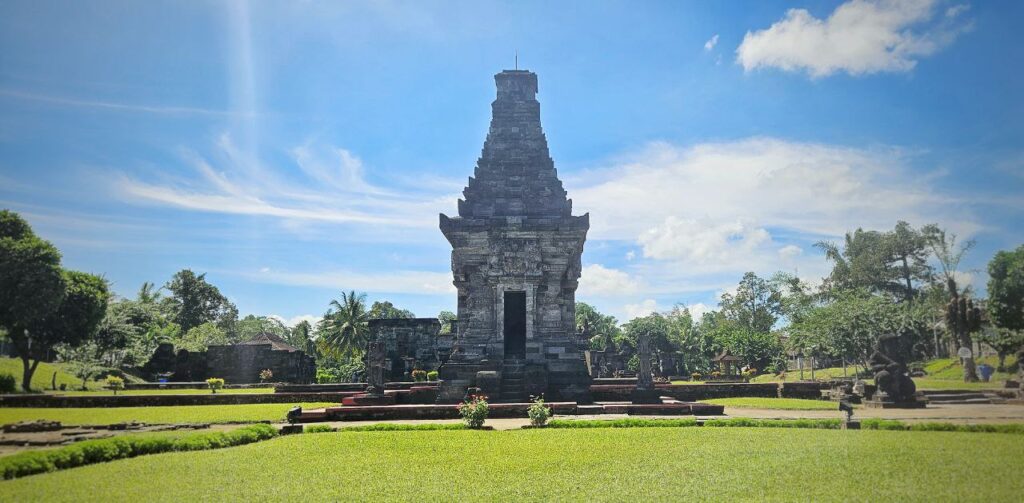
The highlight of the complex is the towering Candra Sengkala Temple, also known as Brawijaya Temple.
Inside the temple stands a statue of Ganesha, the Hindu deity of wisdom and prosperity. The temple’s crown-shaped top is believed to symbolically protect the sacred grounds from negative forces.
Today, this structure is frequently used as a symbolic icon for institutions in East Java Province.
Exploring the Middle and Rear Courtyards
Beyond the main structures, the complex extends into the middle and rear courtyards. Although much of these areas now consist of ruins, archaeological sketches displayed on-site help visitors imagine the temple’s former grandeur.
Informational boards explain the history, symbolism, and cultural importance of this once-mighty Hindu sanctuary.
Why Visit Candi Penataran?
If you:
- Prefer historical sites without heavy crowds
- Love Majapahit-era architecture
- Want an affordable cultural experience
- Enjoy discovering hidden gems in East Java
Then Candi Penataran is a must-visit destination in Blitar.
Unlike Borobudur or Prambanan, this temple complex offers tranquility, authenticity, and a more immersive historical atmosphere.
Travel Tips for Visiting Candi Penataran
- Visit early in the morning
- Bring sun protection
- Wear comfortable walking shoes
- Allocate 1–2 hours for exploration
- Combine your trip with other Blitar attractions
Final Thoughts
Candi Penataran may not be as globally famous as Indonesia’s iconic temples, but its historical depth and architectural beauty make it one of the most important Hindu temple complexes in East Java.
For travelers seeking meaningful cultural experiences beyond the mainstream, this forgotten witness of Java’s golden era is absolutely worth the visit.
FAQ About Candi Penataran
1. Where is Candi Penataran located?
Candi Penataran is located in Penataran Village, Nglegok District, about 14 kilometers from downtown Blitar, East Java, Indonesia. The temple complex sits on the slopes of Mount Kelud and is easily accessible by car or motorbike.
2. Is there an entrance fee to Candi Penataran?
As of 2025, there is no official entrance fee to visit Candi Penataran. Visitors are welcome to make voluntary donations to help maintain the archaeological site.
3. What are the opening hours of Candi Penataran?
Candi Penataran is open daily from 8:00 AM to 5:00 PM. The best time to visit is in the morning to avoid the heat, especially during the dry season.
4. How old is Candi Penataran?
Candi Penataran dates back to the 12th century and was developed during the Kediri and Majapahit Kingdoms. It served as an important state temple for royal ceremonies and Hindu religious rituals.
5. Why is Candi Penataran important?
Candi Penataran is the largest Hindu temple complex in East Java. It played a significant role during the Majapahit era and features important structures such as Bale Agung, Pendopo Teras, and the Candra Sengkala Temple.
6. How long should I spend at Candi Penataran?
Most visitors spend around 1–2 hours exploring the temple complex. History enthusiasts may want to stay longer to read the information boards and study the intricate stone reliefs.
No responses yet